
History
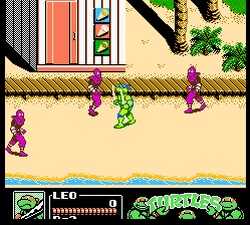
"Ninja Turtles 3"—that’s Teenage Mutant Ninja Turtles III: The Manhattan Project, the NES cart that got passed from block to block. Officially Teenage Mutant Ninja Turtles III: The Manhattan Project, to friends it’s simply TMNT 3. From Konami, with that signature side‑scrolling beat‑’em‑up feel and tight couch co‑op on one screen, it catapults you from Florida beaches to Manhattan streets and onward to the Technodrome. Every crack of the nunchucks, every surf‑stage leap, every bite of pizza—pure chiptune adrenaline. Bebop and Rocksteady crash the party, the nasty Foot Clan lurks, Krang schemes, and of course Shredder; front and center are Leonardo, Raphael, Donatello, and Michelangelo, each with their own pace, reach, and special moves. It’s the kind of game that turned a quiet night into a mini neighborhood championship: who gets farther, who dares burn a sliver of health for a super, and who nabs the coveted slice of pizza. Shoulder throws, slides, spinning uppercuts—all on two simple buttons.
Why do we still remember it? Because "Ninja Turtles 3 on NES" sounds like a secret knock back to childhood: "two‑player, let’s roll—Manhattan’s waiting." The project channels the cartoon’s vibe yet lets the streets and underbelly breathe—from sewers to bridges, ship decks to neon‑soaked nights. It all clicks: snappy cutscenes, unmistakable pixel sprites, that steady beat‑and‑advance rhythm. We’ve collected its development story and place in the series in the history section, and you can cross‑check bosses and locations on English Wikipedia. Call it whatever—"TMNT 3," "Manhattan Project," "the two‑player turtles game"—the feeling’s the same: grab a pad, grin, and rumble through New York’s alleys all over again, saving the city from Shredder.
Gameplay

TMNT III on the NES is that rare beat-’em-up where the tempo isn’t measured in minutes but in punches. From the first frame you feel the snap of the combat: step, feint, jump-kick, grab and toss — and a Foot Clan goon bursts into pixels. TMNT III (Teenage Mutant Ninja Turtles III), The Manhattan Project, “Turtles on the Dendy” — call it whatever you like, your fingers instantly remember the beach intro and the chiptune that gets the blood pumping. The special move is a guilty pleasure: huge, life-saving, but it eats HP; do you pop it now or hold your nerve? Each brother brings his own flavor: Leo’s katanas ring, Mikey’s nunchaku whirl like a storm, Donnie keeps the spacing, Raph hits shorter — and meaner. Timing is everything: slip under a shuriken, snap an uppercut, backstep out — and catch the next wave. The game keeps you sharp without shouting: clean, honest sparring — quick, to the point, with satisfying weight behind every strike.
Co-op makes the magic complete. Two players on one couch — Leo holds the line, Raph dives into the thick of it, Donnie tags half the screen, Mikey dances his nunchaku; when the purple Foot press in, one corrals the pack while the other cuts through on a diagonal, and a pizza on the floor feels like a breath of air. Stages flow fast: surf the breakers — read the swell and weave past mines, New York sewers, Channel 6 corridors, then the steel intestines of the Technodrome. On the streets it’s so sweet to sling a goon into an open manhole — a tiny victory that flips the fight. Shredder and Krang win on presence: read their animations, catch the openings, conserve your continues. Keep your spacing, don’t get greedy with combos, dive in and bail on time. Manhattan floating in the sky is just set dressing — the tension is grounded: you feel every whiff in your chest. In our gameplay breakdown we dig into the rhythm, the techniques, and that unmistakable 8-bit rush you can’t put down.