
Ninja Turtles 3 story
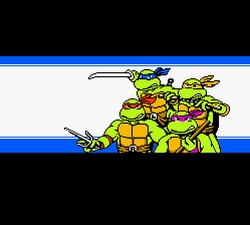
For a lot of us, "Ninja Turtles 3" starts with that scene: scorching heat, a beach breather, and then Channel 6 shatters into a shriek — Shredder cuts the feed and hoists Manhattan into the sky. Vacation’s over; you’re back on the sticks. Some call it "Teenage Mutant Ninja Turtles III: The Manhattan Project," others just "TMNT III," and on neighborhood Famiclones it was simply "Turtles 3 on the Dendy" — that local NES clone. Whatever the name, the feeling’s the same: the smell of pizza, the click of a cart, and you’re sprinting off to save New York.
How this one came together
After the previous hit, Konami took a swing not at an arcade port but a console‑first original. A rare case of a big publisher straight-up loving the hardware. By mid‑1991 the team knew what fans wanted: an adventure, two‑player couch co‑op, and that crunchy beat ’em up where every hit thumps in your thumbs. "Teenage Mutant Ninja Turtles III" was built pad‑first: tight scrolling through Manhattan blocks, a sun‑soaked Florida opener, the obligatory sewers, and a stop at Channel 6 with April O’Neil. All from scratch, to the pulse of an 8‑bit heart.
You can feel it in the details. Each stage walks you through familiar cartoon sets: shambling Foot Clan grunts, cheeky traps, bosses with their own quirks and timings. The pitch was simple: "give players the show, only under their thumbs." The music? Konami’s signature chiptune hooks — the kind that stick for years. Two notes in and you’re on a surfboard, carving a wave and swatting bots as pixel spray flies.
Release and the road to players
It debuted in Japan at the end of 1991, numbered "2" on Famicom thanks to that region’s lineup quirks. In the West, the Ultra Games box with a big NES badge landed in 1992. Magazines like Nintendo Power mapped out stages, dropped strategy tips, and reveled in boss spreads. It felt like a real media moment: yesterday you were skimming comics and weekend cartoons; today those same heroes live in your console — not a hand‑me‑down arcade port, but something cut for the living room.
Where we grew up, "Ninja Turtles 3" rode the Dendy wave. Cartridges bounced from school backpacks to stairwell trade spots, from video clubs to a neighbor’s multicart. Labels said all sorts of things: "Ninja Turtles 3," "The Manhattan Project," sometimes just "Turtles 3." Often it hid on a 100‑in‑1, tucked between a shmup and some soccer. Some of us played a bootleg cart with a crooked logo; others found it at a game club: two controllers, a noisy room, a line for co‑op. The titles swirled — "Teenage Mutant Ninja Turtles III," "The Manhattan Project," "Turtles 3" — but the mission never changed: find Shredder, reach Krang, and bring Manhattan back to earth.
Why we loved it
The secret’s simple: it wasn’t just a brawler, it was a summer‑flavored New York adventure. Pixel‑art Manhattan felt alive — beach, boardwalks, rooftops, sewers, that Channel 6 studio — all with arcade bite, right at home. Two‑player co‑op turned the beat ’em up into a mini‑party: calling dibs on nunchucks or katana, arguing over combos, learning the special attacks, wiping on the final boss, then finally knocking down Super Shredder on attempt number three. It felt like a shared quest where even a loss became part of the legend.
The music turned the heat up. Anyone who booted it late remembers chiptunes filling the room, like the sprites were lit from within. The soundtrack didn’t chase the movie; it marched to its own springy, punchy groove with slick transitions between sections. Boss themes spiked your pulse — when Krang loomed in his walker, and when you knew the real Shredder still waited beyond him.
And "Ninja Turtles 3" felt modern for its day: brisk cutscenes set up each episode and pointed you to the next scrap. That mattered more than any lore dump — the world assembled on the fly, and you believed it: yeah, Manhattan really is hanging in the sky, so hit Start and don’t let up. It was faith in the home console as a window into adventure. And that window swung open every time the power rocker clicked and the Konami logo blinked on.
Where the wave rolled
"TMNT III: The Manhattan Project" didn’t arrive with fireworks — but it stuck around. In the U.S., mags quoted it and parked it on NES must‑play lists; in Japan, it earned respect for being honestly 8‑bit yet packed with set pieces; across the post‑Soviet scene, it felt like a playground tournament, where co‑op and a one‑evening clear became a ritual. Over time, everyone kept their own anchor: the surf stage’s first enemy wave, the clank of elevators before a boss, or a hand‑scribbled "Turtles 3" on a worn cart label. Even now, when someone says "The Manhattan Project," you can hear New York’s low hum — and catch a little whiff of pizza.
That’s how this game lives — under different names, in different boxes and collections, but always close. Say "Ninja Turtles 3," "TMNT III," or, the way we said it on the corner, "Turtles 3 on the Dendy," and people know exactly what you mean: that summer when Manhattan floated into the clouds and we jumped back into the fight, shoulder to shoulder, on one couch.